 +86 133 5617 3819
Every electrical cabinet carries an invisible risk. A loose connection, an overloaded terminal, or a failing component can ignite a fire in seconds — long before anyone notices. And by the time a smoke detector sounds, the damage is usually already done.
For distribution boards, control panels, and energy-storage cabinets, a conventional extinguisher is rarely the answer. It’s too big, too slow to respond, or it damages the very electronics it was meant to save.
That’s why a new generation of protection — the DIN-rail condensed aerosol fire extinguisher — has quietly become the standard for protecting enclosed electrical spaces. In this guide, we’ll explain how it works, where it fits, and how to choose and size one correctly.
1. The hidden cost of an electrical cabinet fire
An electrical enclosure fire rarely stays small. Because cabinets concentrate power, wiring, and heat in a tight space, a fault can escalate fast:
- Equipment loss — a burnt switchboard or drive can cost tens of thousands to replace.
- Downtime — for a factory, a data center, or a solar farm, an unplanned stop can dwarf the cost of the hardware.
- Safety and liability — electrical fires threaten operators and can trigger regulatory or insurance consequences.
- Reputation — one publicized incident can cost customers’ trust for years.
The frustrating part? Most of these fires start small — and could be stopped at the source if the right protection were sitting right where the fire begins.
2. What is a DIN-rail aerosol fire extinguisher?
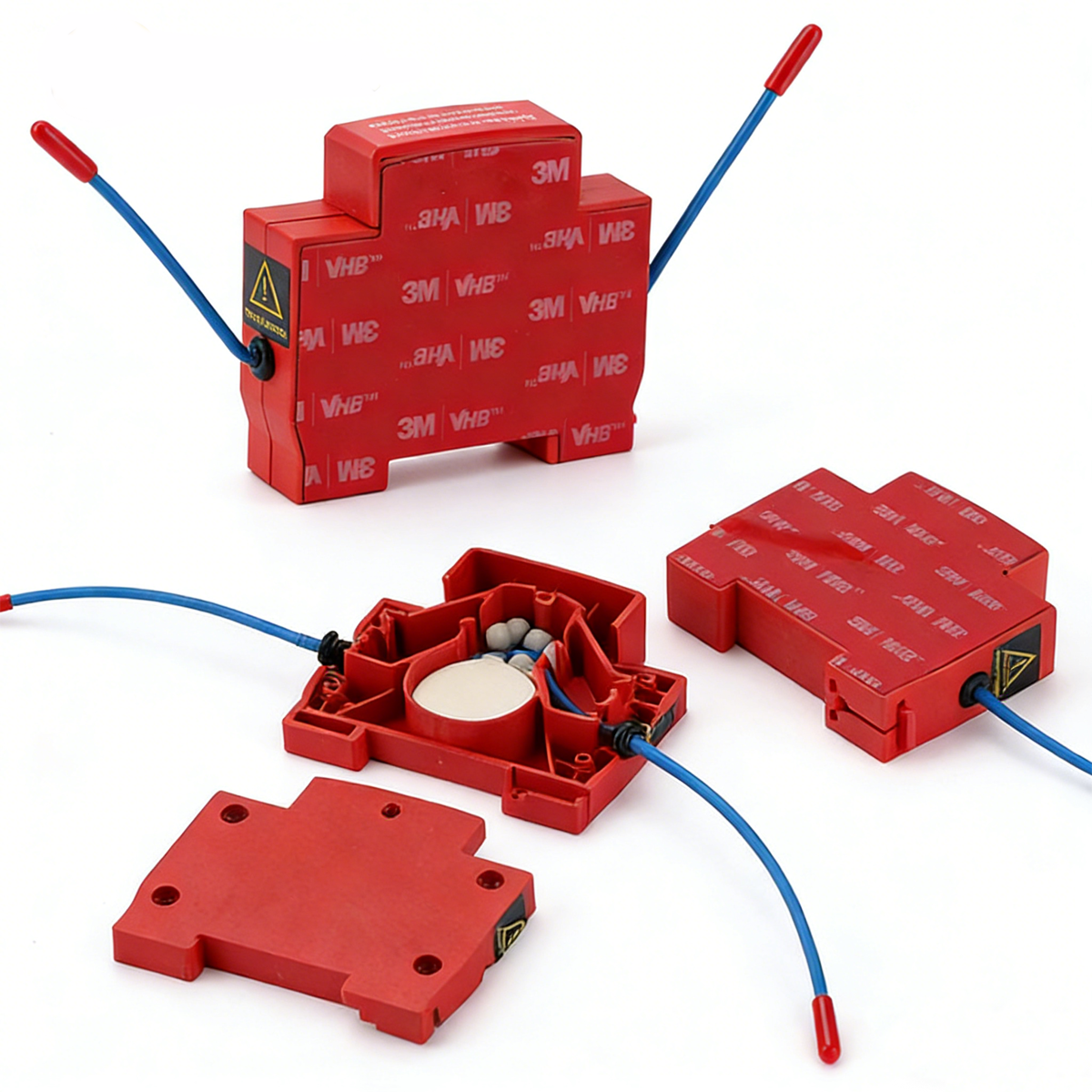
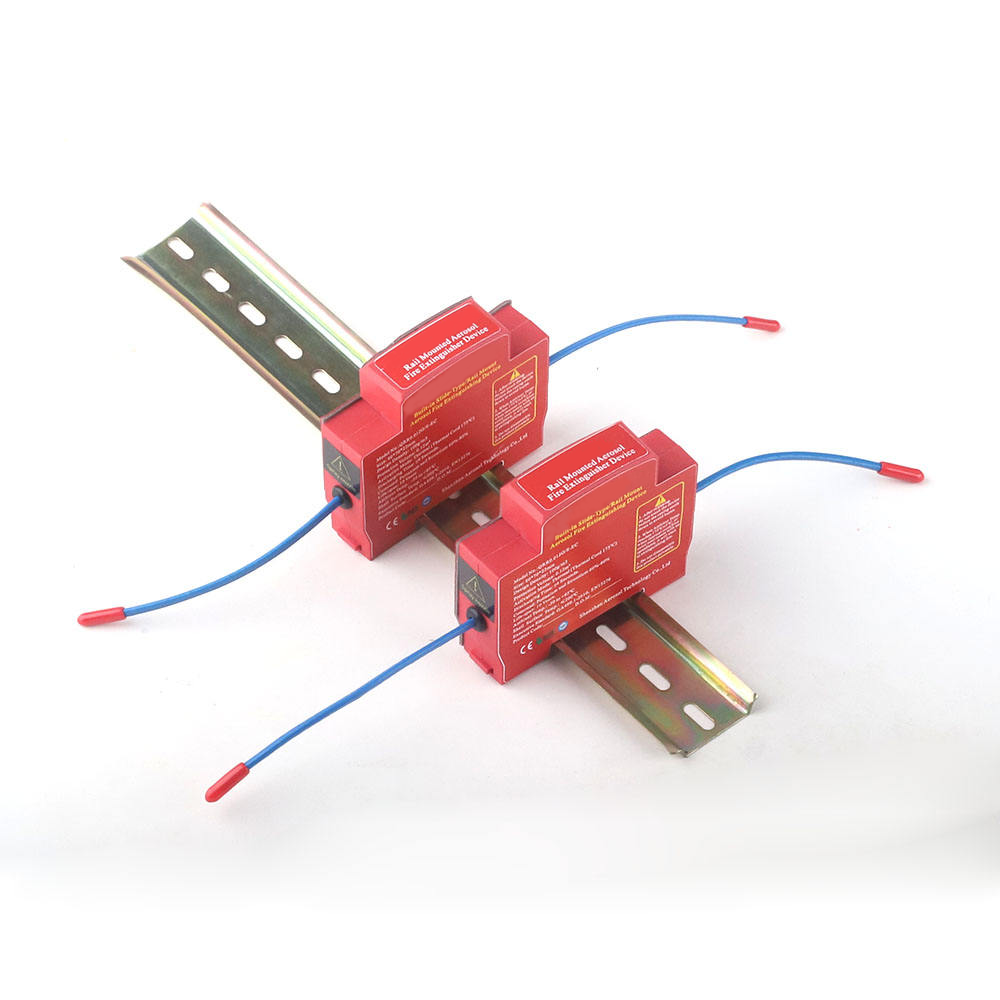
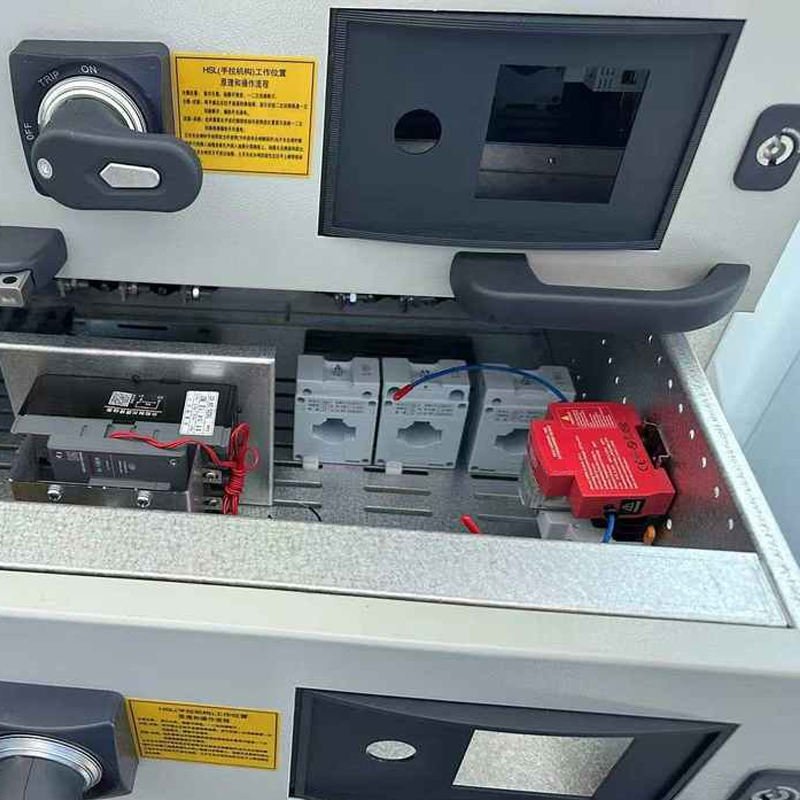
A DIN-rail aerosol fire extinguisher is a compact, self-contained fire suppression device that mounts directly onto a standard 35 mm DIN rail (IEC 60715) — right next to the circuit breakers, contactors, and relays inside an enclosure.
Unlike a room-flooding system, it protects the space where a fire is most likely to start: inside the cabinet itself. And it does so automatically, with no external power, no piping, and no control panel.
Aerosol extinguishers work on a simple “fire-against-fire” principle — a solid compound reacts to release ultra-fine particles that break the flame’s chemical chain reaction within seconds.
3. How condensed aerosol suppression works
The device contains a solid extinguishing compound — typically based on strontium nitrate and potassium nitrate. It stays inert and stable for years, then activates only when heat tells it to. Here’s the sequence:
The mechanism is twofold. Chemically, the aerosol particles bind with the free radicals (·OH, ·H) that sustain combustion, breaking the chain reaction. Physically, they absorb heat and the inert gas dilutes local oxygen. The particles stay suspended for minutes, which helps prevent re-ignition.
Watch it work — live activation test. Open in YouTube Walax channel ↗
4. Why traditional systems fall short in cabinets
Most fire protection was designed for rooms, not enclosures. When applied to a distribution board or battery cabinet, each conventional option brings its own problem:
| Method | The problem inside a cabinet |
|---|---|
| Water / sprinkler | Conductive — causes short circuits; needs a water supply and piping. |
| Dry powder | Corrosive residue — damages contacts, PCBs, and precision parts. |
| CO₂ | Pressurized cylinders — bulky, needs piping, and can cause thermal shock. |
| Clean agent (FM-200 / Novec) | Complex & costly — needs a control panel and pipe network; ineffective on battery thermal runaway. |
| Condensed aerosol | Purpose-built — no power, no piping, non-conductive, fits on the DIN rail. |
5. Key advantages at a glance
- Self-activating, no power required — works even during a total blackout, when the fire risk is often highest.
- Non-conductive & non-corrosive — safe for energized equipment; won’t short your electronics.
- Fast — discharges in 2–6 seconds, suppressing the fire before it spreads.
- Compact — as narrow as a single-pole MCB; snaps onto the rail without disturbing wiring.
- 10-year maintenance-free — no pressure checks, no refills, no annual testing.
- Eco-friendly — zero ozone-depletion potential and near-zero global-warming potential.
- Low total cost of ownership — no piping, no cylinders, no recurring service contracts.
6. Where to use it
Condensed aerosol fire extinguishers are built for any sealed or semi-sealed electrical enclosure where early-stage suppression is critical:
- Distribution boards & switchgear — protect the busbar, breakers, and terminals.
- Control panels — PLC, VFD, and motor control cabinets in factories and plants.
- Battery energy storage (BESS/ESS) — cabinet-level protection against thermal runaway.
- EV charging stations & power cabinets — unattended, high-current environments.
- Telecom & data center racks — protect IT equipment without damaging it.
- PV combiner boxes & inverters — outdoor solar installations.
7. How to choose and size a unit
Getting the right unit comes down to a few straightforward checks. Work through this list before you order:
- Calculate the protected volume. Multiply the cabinet’s internal height × width × depth (in metres). Example: 0.8 × 0.6 × 0.3 = 0.144 m³. Choose a unit rated for at least that volume.
- Confirm the activation temperature (typically ~170–175 °C) suits your normal operating conditions.
- Check the operating temperature range — industrial units commonly span -50 °C to +90 °C for outdoor or harsh use.
- Verify certifications — look for UL 2775, EN 15276, ISO 15779, or NFPA 2010 references, plus CE.
- Confirm DIN-rail compatibility — TH 35 rails per IEC 60715, mounting alongside your existing devices.
Buyer’s checklist
- Protected volume matches your cabinet (or ask the factory to size it)
- Agent is electrically non-conductive and non-corrosive
- Activation temperature and response time verified
- Service life and maintenance requirements stated
- Certification documents and test reports available
- Customization offered (agent mass, probe length, size, temperature)
8. Frequently asked questions
Will the aerosol damage my electronics?
No. Properly certified condensed aerosol agents are electrically non-conductive and non-corrosive. They undergo dielectric-strength testing to confirm they can discharge safely on energized equipment. After discharge, the fine particles settle and are removed by vacuuming and wiping.
Can it accidentally discharge?
Thermal units activate at around 170–175 °C — far above normal cabinet operating temperatures. As long as you avoid mounting it next to a concentrated heat source, accidental activation is highly unlikely. (Electrically-triggered variants are also available for systems that need BMS or alarm integration.)
How long does it last?
Typically 10 years from manufacture, with no pressure checks or refills required during that period. The solid compound stays stable and inert until activated.
Is it safe for people?
Yes — the agent is non-toxic and has no ozone or global-warming impact. As with any discharged extinguishing agent, ventilate the cabinet before re-energizing and before working inside it.
How many units do I need?
Size by internal volume. A small distribution board may need a single unit; a larger or multi-compartment cabinet may need several. For anything beyond a single-unit listing, ask the manufacturer to confirm the correct layout.
9. Why choose Walax Electric
Walax Electric is a factory-direct manufacturer of low-voltage electrical and fire-protection products, based in Xinguang Industrial Zone, Liushi Town, Wenzhou City — China’s electrical manufacturing hub. When you buy from us, you’re buying from the source:
- Factory-direct pricing — no middlemen, competitive OEM/ODM terms and MOQs.
- Certification & test reports — we provide the documentation engineers and buyers need.
- Customization — agent mass, activation temperature, probe length, and branding tailored to your project.
- Fast, responsive support — real engineers answer your sizing and selection questions.
Protect your cabinets — get a quote today
Tell us your cabinet dimensions and application, and we’ll recommend the right unit and send a quotation.